
Looking For Parking Meter Signs? Here Are 10 Things You Should Know
Whether you're coordinating a special event, managing construction zones, or handling municipal parking operations, parking meter signs play a crucial role in communicating important information to drivers. But if you've never purchased them before, the process can feel a bit overwhelming.
Here are 10 things you should know before buying parking meter signs, parking meter covers, or parking meter bags for your next project.
1. Temporary Parking Meter Signs Are Different From Permanent Ones
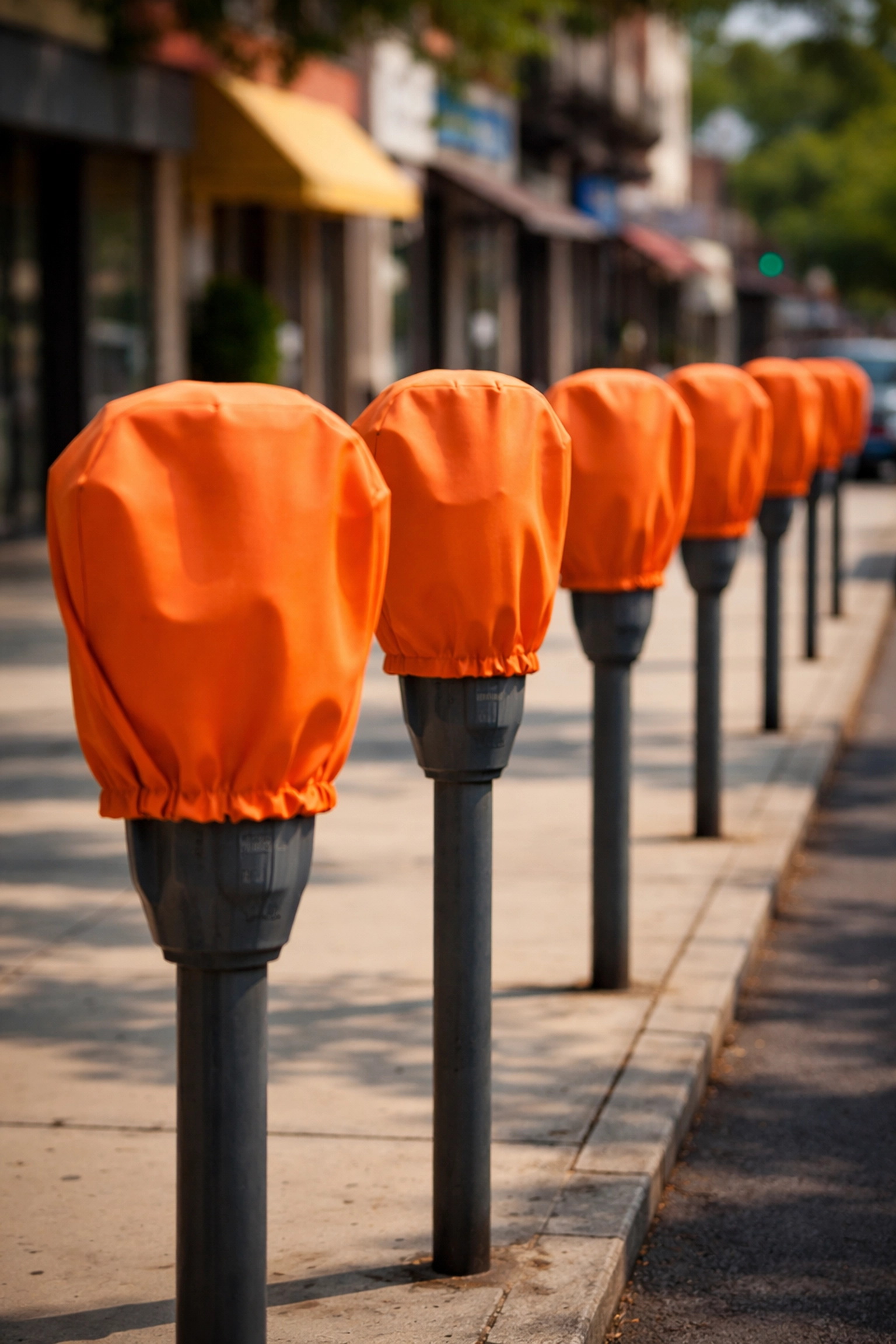
When most people think of parking meter signs, they picture the standard metal signs you see bolted to poles in downtown areas. But there's a whole category of temporary parking meter signage designed for short-term use.
Temporary solutions include:
- Parking meter covers that slip over existing meters
- Parking meter bags that wrap around meter heads
- Sign covers that attach to existing signage
These options are ideal when you need to block off meters for events, filming, construction, or maintenance without permanently altering the infrastructure.
2. Material Quality Makes a Huge Difference
Not all parking meter signs are created equal. The material you choose directly impacts durability, visibility, and how long your signs will last outdoors.
At SignCovers.com, we use 13 OZ Scrim Reinforced exterior garage banner materials for our parking meter covers and signs. This heavy-duty material is specifically designed for outdoor use and offers several advantages:
- Tear resistance thanks to the scrim reinforcement
- UV protection to prevent fading in direct sunlight
- Weather durability for rain, wind, and temperature changes
- Professional appearance that looks clean and official
Depending on your circumstances, cheaper materials might save you money upfront but could fail when you need them most. Quality materials ensure your signage stays intact and readable throughout your event or project.
3. Custom Sizing Is Available (And Often Necessary)
Parking meters come in all shapes and sizes. The single-head meters you see on neighborhood streets are different from the multi-space pay stations in parking garages. And older meter models have different dimensions than newer digital ones.
That's why custom sizing is so important when ordering parking meter covers or parking meter bags. A one-size-fits-all approach rarely works well in the real world.
Here are some things to consider when measuring:
- Height of the meter head
- Width at the widest point
- Depth from front to back
- Pole diameter if attaching below the meter
Taking accurate measurements before ordering will save you time and frustration when installation day arrives.
4. Installation Should Be Quick and Easy
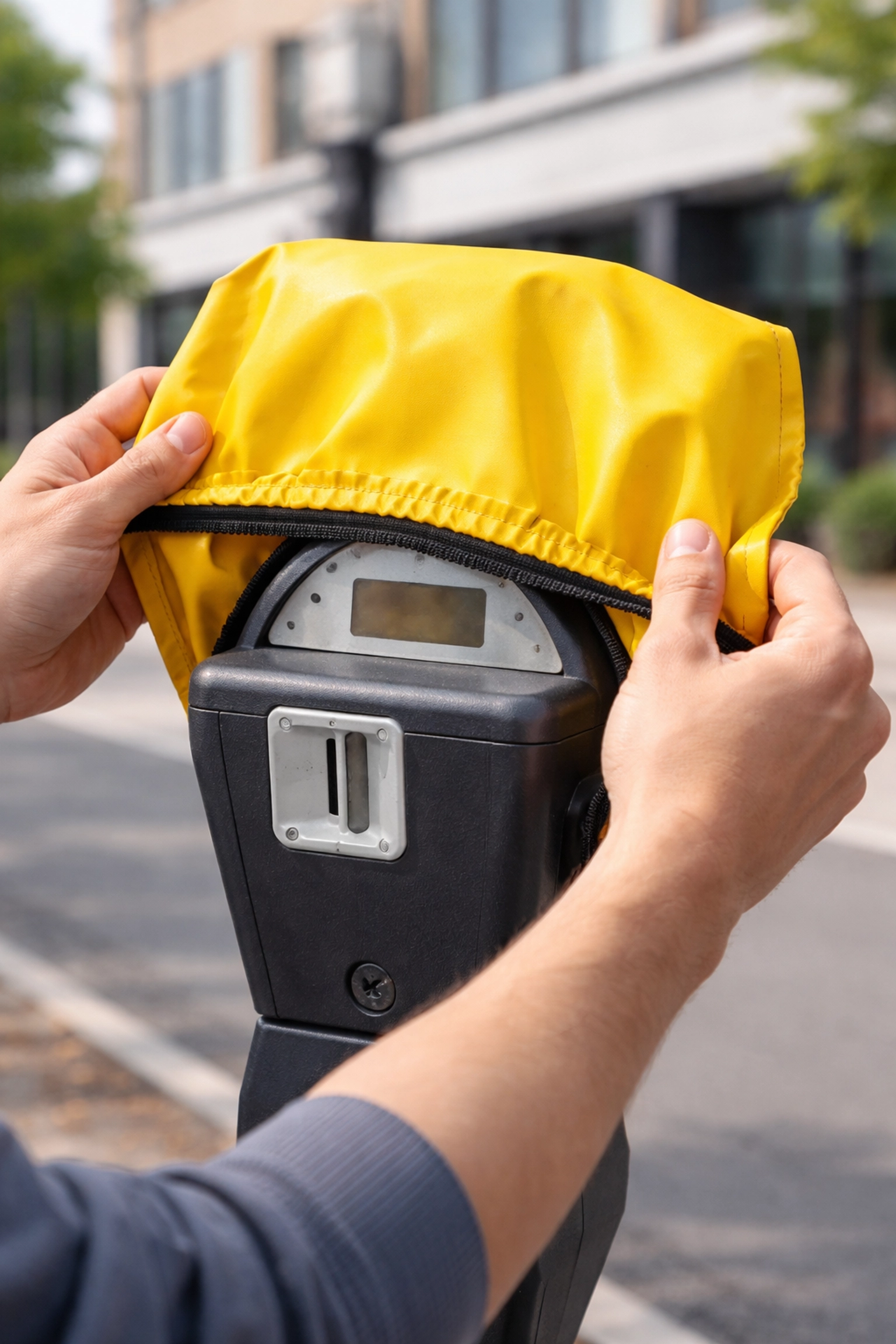
One of the biggest advantages of temporary parking meter signs is how fast they can be deployed. Unlike permanent signage that requires tools, hardware, and sometimes permits, temporary covers and bags are designed for easy installation.
Most parking meter covers can be installed in under a minute per meter. They typically use:
- Elastic bands or drawstrings
- Velcro straps
- Slip-on designs
This makes them perfect for event coordinators who need to cover dozens of meters quickly, or for city workers who need to mark meters as out of service without a lot of hassle.
5. Parking Meter Covers vs. Parking Meter Bags: What's the Difference?
You'll often see these terms used interchangeably, but there are some subtle differences worth noting.
Parking Meter Covers typically refer to:
- Rigid or semi-rigid covers
- Slip-over designs that fit snugly
- Often feature printed messaging or graphics
Parking Meter Bags typically refer to:
- More flexible, bag-style covers
- Cinch or tie closures
- Sometimes used for quick "out of order" marking
Both serve similar purposes, but the right choice depends on your specific needs. If you need professional-looking covers with custom printing for an event, covers made from 13 OZ Scrim Reinforced materials are usually the better choice. For quick utility marking, simpler bags might work fine.
Check out our parking meter covers to see what options are available.
6. There Are Strict Rules About Blocking Meters
Before you cover any parking meters, make sure you have proper authorization. Most municipalities have specific regulations about who can block meters and under what circumstances.
Common requirements include:
- Permits from the city or parking authority
- Advance notice to affected businesses or residents
- Time limits on how long meters can be blocked
- Proper signage indicating why meters are covered
Ignoring these rules can result in fines ranging from $25 to over $500, depending on your location. Always check with local authorities before deploying parking meter signs or covers.
7. Visibility and Readability Matter More Than You Think
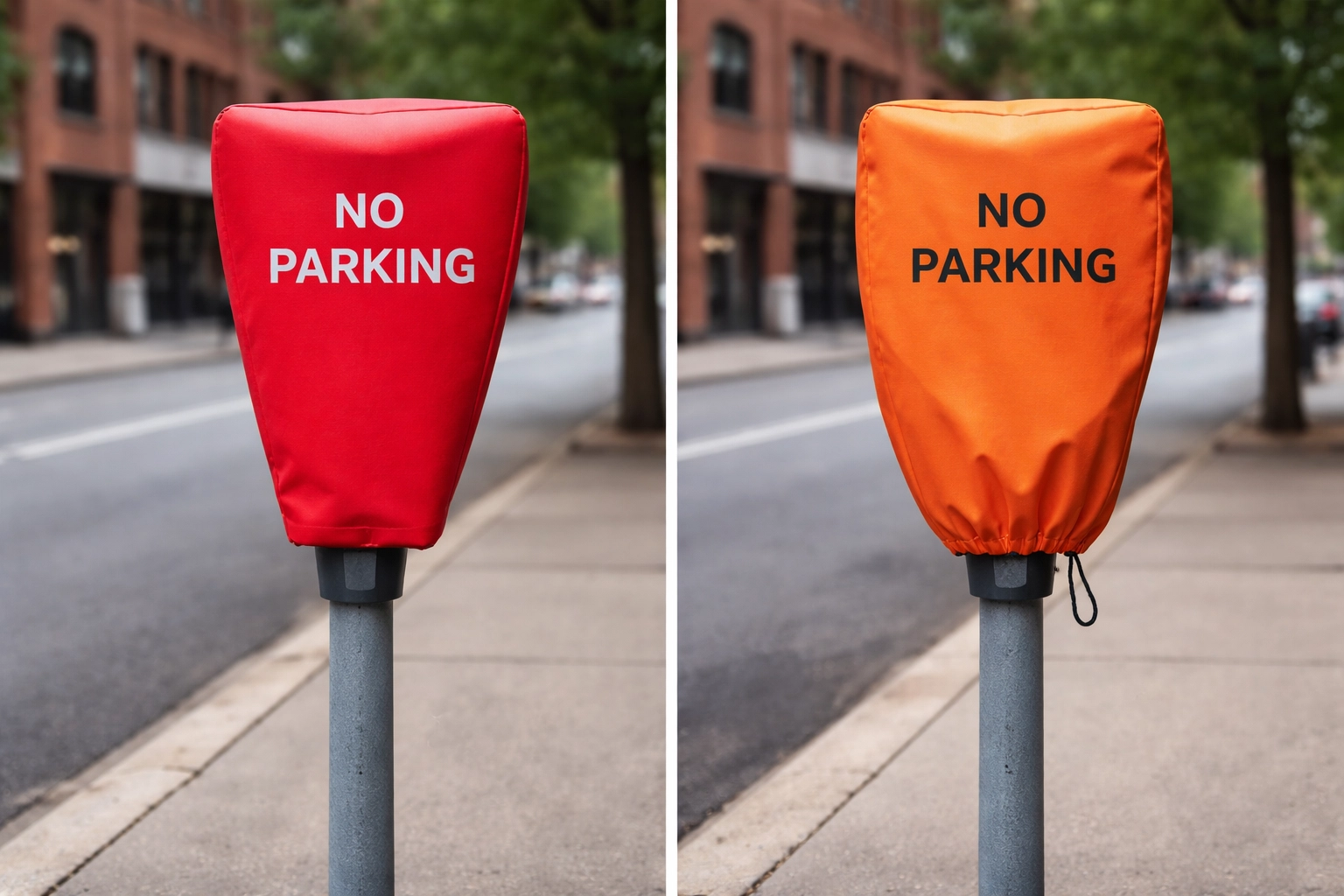
A parking meter sign that drivers can't read is essentially useless. When designing your signage, keep these visibility principles in mind:
- High contrast colors (black text on white or yellow backgrounds work well)
- Large, bold fonts that can be read from a distance
- Simple messaging that communicates quickly
- Directional arrows to indicate where restrictions apply
Remember that drivers are often reading these signs while moving or from inside their vehicles. The clearer and more concise your message, the better.
8. Common Uses for Parking Meter Signs and Covers
Parking meter signs serve a wide variety of purposes across different industries. Here are some of the most common applications:
Events and Festivals
- Blocking meters for vendor loading zones
- Reserving parking for VIP guests
- Creating temporary no-parking zones for stages or equipment
Film and Production
- Securing parking for production vehicles
- Clearing streets for filming
- Marking crew parking areas
Construction and Maintenance
- Blocking meters near work zones
- Indicating temporary parking changes
- Marking areas for equipment or materials
Municipal Operations
- Indicating broken or out-of-service meters
- Temporary enforcement changes
- Special event parking management
Whatever your use case, having professional-quality parking meter signs helps ensure compliance and reduces confusion.
9. Durability Matters for Extended Use
If you're only covering meters for a few hours, durability might not be your top concern. But for multi-day events, construction projects, or ongoing municipal use, your parking meter signs need to withstand the elements.
The 13 OZ Scrim Reinforced exterior garage banner materials we use at SignCovers.com are built for extended outdoor exposure. They resist:
- Fading from UV exposure
- Tearing from wind or handling
- Water damage from rain or sprinklers
- Temperature extremes in hot or cold weather
This means your signs will still look professional and readable on day seven just like they did on day one.

10. Where to Get Quality Parking Meter Signs
When you're ready to order parking meter signs, covers, or bags, you have several options. Big-box office supply stores carry basic options, but they're often limited in size and customization.
For professional-quality parking meter covers with custom sizing and printing, specialty suppliers like SignCovers.com offer more flexibility. We can create covers that fit your specific meter dimensions and include your custom messaging, logos, or graphics.
You can also explore our parking sign covers for solutions that work with existing street signage.
The Bottom Line
Parking meter signs might seem like a small detail, but they play an important role in managing parking, communicating with drivers, and keeping your events or projects running smoothly. By understanding your options: from materials and sizing to installation and regulations: you can make smarter decisions that save time and money.
Whether you need parking meter covers for a weekend festival, parking meter bags for construction zones, or custom signs for municipal use, the right products make all the difference. Focus on quality materials like 13 OZ Scrim Reinforced exterior garage banner materials, ensure proper sizing, and always check local regulations before deployment.